Cart
0
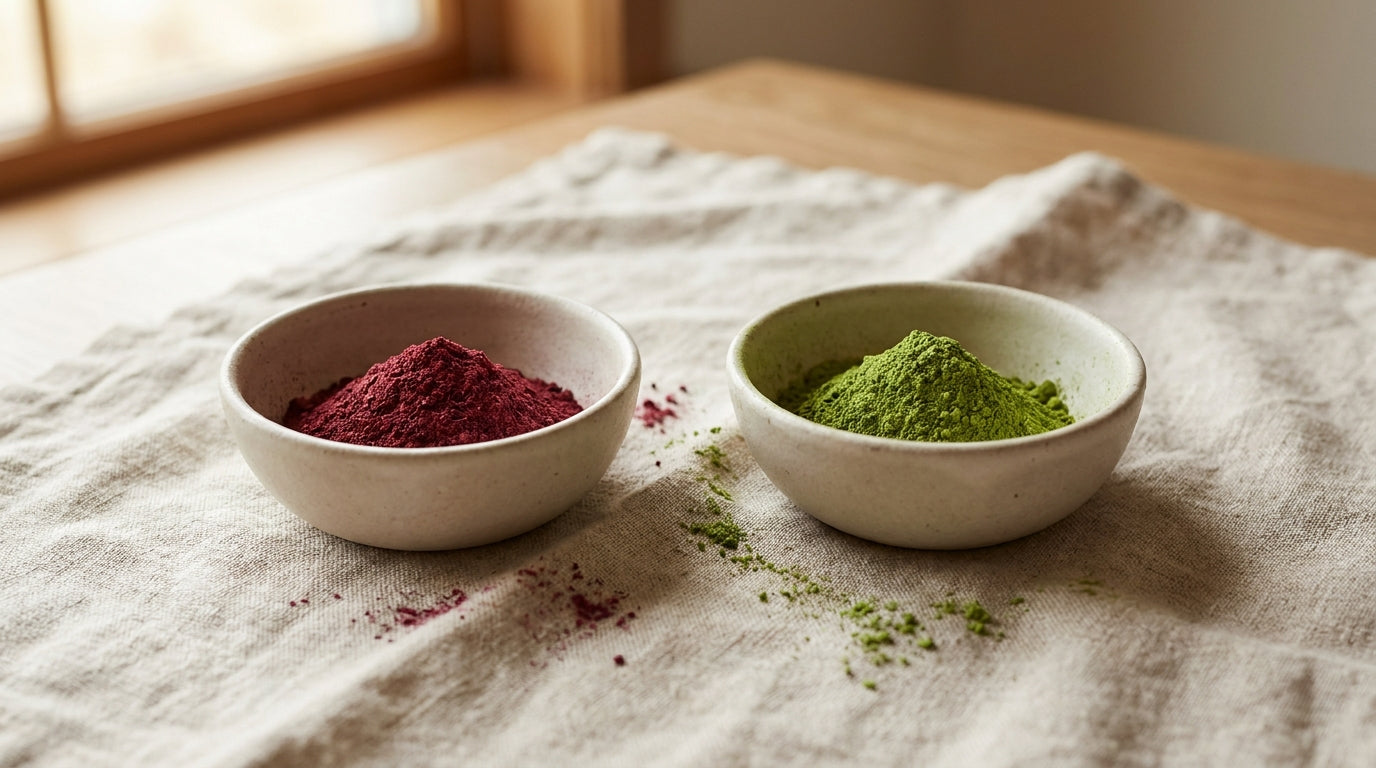
If you have an Eliézer Clay kit, you already know the ritual: a kaolin clay base, a splash of water, and one spoon of a coloured powder stirred through. The powder is where the choice lives, and it usually comes down to two. Hibiscus or matcha. This guide explains what each one does, so you can pick the right add-in for your skin, or decide to keep both on hand.
Hibiscus or Matcha: The Short Answer
Reach for hibiscus when you want gentle exfoliation and brightening. Its natural fruit acids lift dull, tired skin and soften the look of fine lines, which makes it the anti-ageing choice. Reach for matcha when you want to calm and soothe. It is rich in antioxidants and has a comforting, redness-calming feel, which suits sensitive, reactive and breakout-prone skin. Both are gentle, both are antioxidant-rich, and both blend into the same kaolin base, so there is no wrong answer, only the one that fits what your skin needs this week.
Hibiscus vs Matcha at a Glance
| Hibiscus Powder | Matcha Powder | |
|---|---|---|
| Best for | Dull, mature or uneven skin, and the look of fine lines | Red, reactive, sensitive or breakout-prone skin |
| Main actives | Natural alpha hydroxy acids (AHAs) and antioxidant anthocyanins | Green tea polyphenols and chlorophyll |
| What you notice | Gentle exfoliation, a brighter tone and a firmer-looking finish | A calm, soothed feel and less visible redness |
| Skin feel | Lightly resurfacing | Cooling and calming |
| Ready-made in | the Firming Bundle (kaolin and hibiscus) | the Calming Bundle (kaolin and matcha) |
What Hibiscus Powder Does for Skin
Hibiscus is often called the "Botox plant," and the useful part is not the nickname but the chemistry behind it. The flower is naturally rich in alpha hydroxy acids, the same family of gentle fruit acids used to exfoliate and refine skin, along with antioxidant anthocyanins that give it its deep red colour. In practice that means hibiscus lifts away dull surface cells, helps even out tone, and leaves skin looking brighter and firmer. Laboratory research on Hibiscus sabdariffa has found that its compounds support the skin's collagen-producing cells and help counter oxidative stress (Wang et al., 2022), which is consistent with its long use as an anti-ageing ingredient.
If your main concerns are dullness, uneven texture or the look of fine lines, hibiscus is your powder. You can read the full rundown in our guide to the benefits of hibiscus powder for skin, or add a jar of Hibiscus Powder to your kit.
What Matcha Powder Does for Skin
Matcha is simply whole green tea leaf, stone-ground to a fine powder, so it is a concentrated source of green tea's polyphenols. Those polyphenols are what make it calming on the skin. A review of green tea and the skin describes them as antioxidant and anti-inflammatory (Hsu, 2005), which is why matcha tends to soothe rather than stimulate. On the face it feels cooling, helps calm visible redness, and pairs well with skin that flares easily or breaks out. Its natural chlorophyll and antioxidants also lend a fresh, clarified look.
If your skin is reactive, sensitive or prone to congestion, matcha is the gentler pick. There is more in our guide to the benefits of matcha powder for skin, or add a tin of Matcha Powder to your ritual.
Which Should You Choose?
Match the powder to what your skin is asking for:
- Choose hibiscus if you want brightening and gentle exfoliation, if your skin looks dull or tired, or if softening the look of fine lines is your goal. It is the heart of the Firming Bundle.
- Choose matcha if your skin is red, reactive or sensitive, or if you are prone to breakouts and want a calming, soothing mask. It is the heart of the Calming Bundle.
- Have both if your skin changes with the seasons, stress or your cycle, which most skin does. Alternating lets you exfoliate one week and calm the next.
Can You Use Matcha and Hibiscus Together?
You can, though the simplest approach is one powder per mask so you can tell what each is doing. A common rhythm is matcha midweek when skin needs calming, and hibiscus at the weekend for a brighter finish. If you would rather have both on hand, the Mindfulness Mask Deluxe Bundle includes kaolin clay, matcha, hibiscus and finishing jojoba oil, so you can switch depending on the day.
How to Make a Hibiscus or Matcha Kaolin Mask
The method is the same whichever you choose:
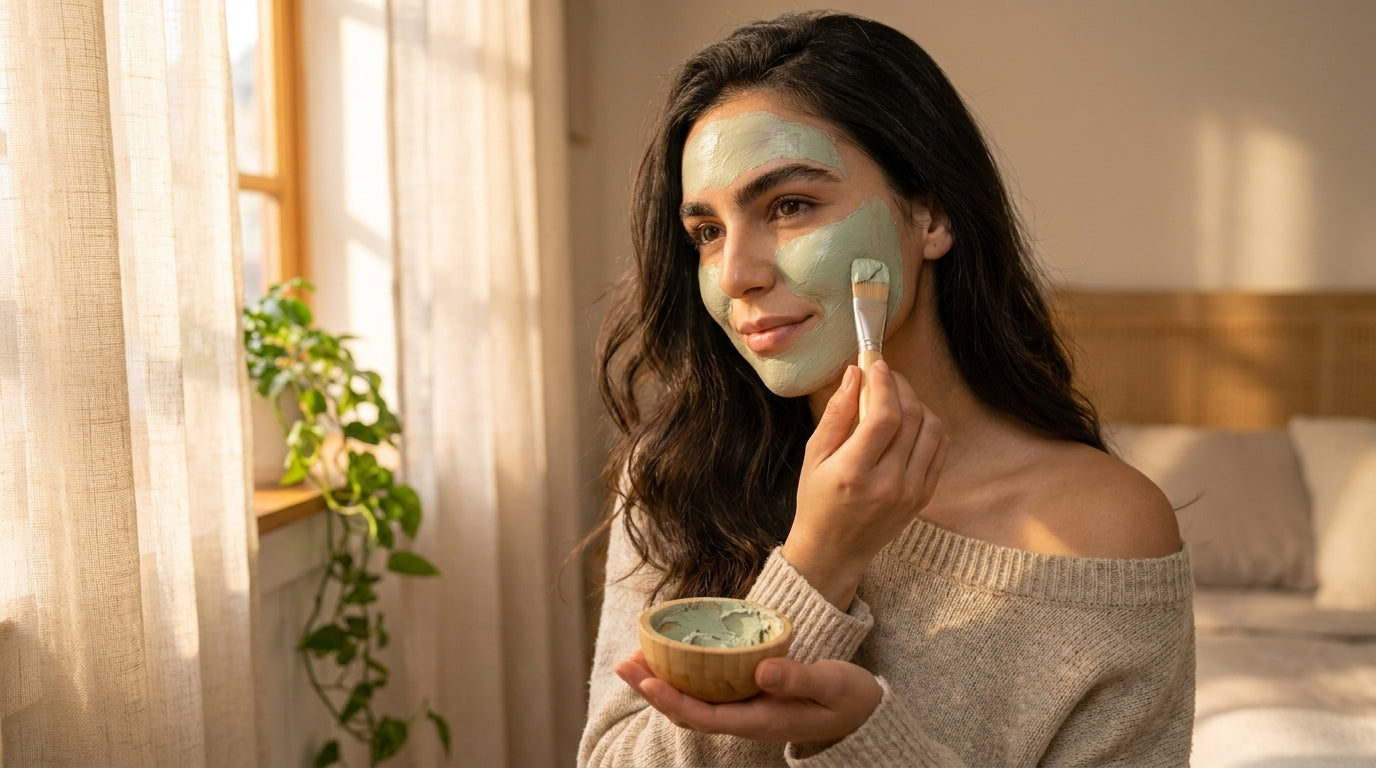
- Add 2 level spoons of Australian Kaolin Clay to your mixing bowl.
- Add 1 spoon of water at a 2:1 clay-to-water ratio, let it absorb for about 60 seconds, then knead into a creamy paste.
- Stir in 1 small spoon of hibiscus (to exfoliate and brighten) or matcha (to calm and soothe).
- Apply, relax for 10 to 15 minutes, and rinse while the mask is still slightly tacky. Do not let it dry out fully.
Frequently Asked Questions
Is matcha or hibiscus better for acne-prone skin?
Matcha is usually the better fit for breakout-prone skin. Its antioxidant, calming character suits skin that is congested or reactive, which is why it anchors the Calming Bundle. Hibiscus can still be used, but its exfoliating action is better aimed at dullness and fine lines than at soothing.
Is hibiscus or matcha better for anti-ageing?
Hibiscus. Its natural AHAs and antioxidants gently exfoliate and brighten, softening the look of fine lines for a firmer-looking finish. Matcha is more about calming and comfort than resurfacing.
Can I mix matcha and hibiscus in the same mask?
It is fine to, but you will get a clearer result using one at a time. Keeping them separate lets you exfoliate with hibiscus on some days and calm with matcha on others, rather than blunting both.
Are hibiscus and matcha safe for sensitive skin?
Both are gentle. Matcha is the more soothing of the two, so it is the natural starting point for sensitive or reactive skin. As with any new ingredient, patch test first and start with one mask a week.
Make it fresh, blended by you
Everything comes fresh in our DIY kits, mixed by you at home, with no preservatives. Add Hibiscus Powder or Matcha Powder to your kit, or get both plus the full ritual in the Mindfulness Mask Deluxe Bundle. Free shipping on orders over $80.
References
Wang, D., Nagata, M., Matsumoto, M., Amen, Y., Wang, D., and Shimizu, K. (2022). Potential of Hibiscus sabdariffa L. and Hibiscus Acid to Reverse Skin Aging. Molecules, 27(18), 6076. https://doi.org/10.3390/molecules27186076
Hsu, S. (2005). Green tea and the skin. Journal of the American Academy of Dermatology, 52(6), 1049-1059. PMID 15928624.