Cart
0
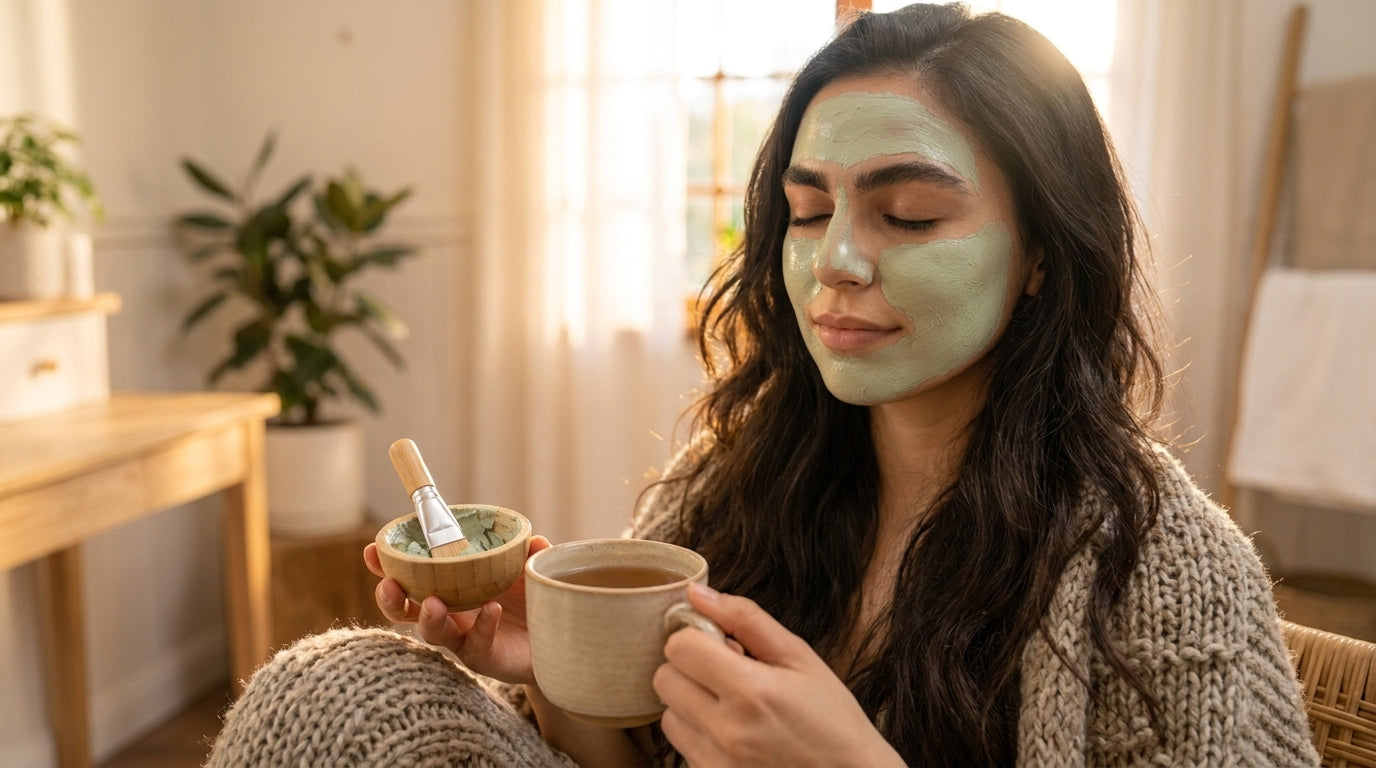
Homemade skincare keeps growing, and for good reason: you know exactly what is in it, you can adjust it to your own skin, and it costs a fraction of what the equivalent sits at on a shelf. But not everything that circulates online belongs on your face, and a few popular ideas are actively harmful.
Here is what is worth using, what is worth avoiding, and the two rules that matter more than any ingredient list.
Rule one: the water rule
This is the single most important thing to understand about DIY skincare, and it is the one most recipes online skip entirely.
Anything containing water will grow bacteria and mould. Not eventually, quickly. A homemade cream, lotion, toner or gel with water in it starts culturing microbes within days, and you cannot see, smell or taste the point at which it turns. Commercial products avoid this with a preservative system, which is exactly the ingredient most DIY recipes are proud of leaving out.
There are two honest ways to deal with this, and only two:
- Use a real preservative. Not vitamin E, not grapefruit seed extract, not rosemary extract. Those are antioxidants, which stop oils going rancid. They do not stop microbial growth, and treating them as if they do is the most common mistake in home formulating.
- Mix it fresh and use it once. Blend the amount you need, use it, rinse it off. Nothing sits around long enough to spoil, and no preservative is required.
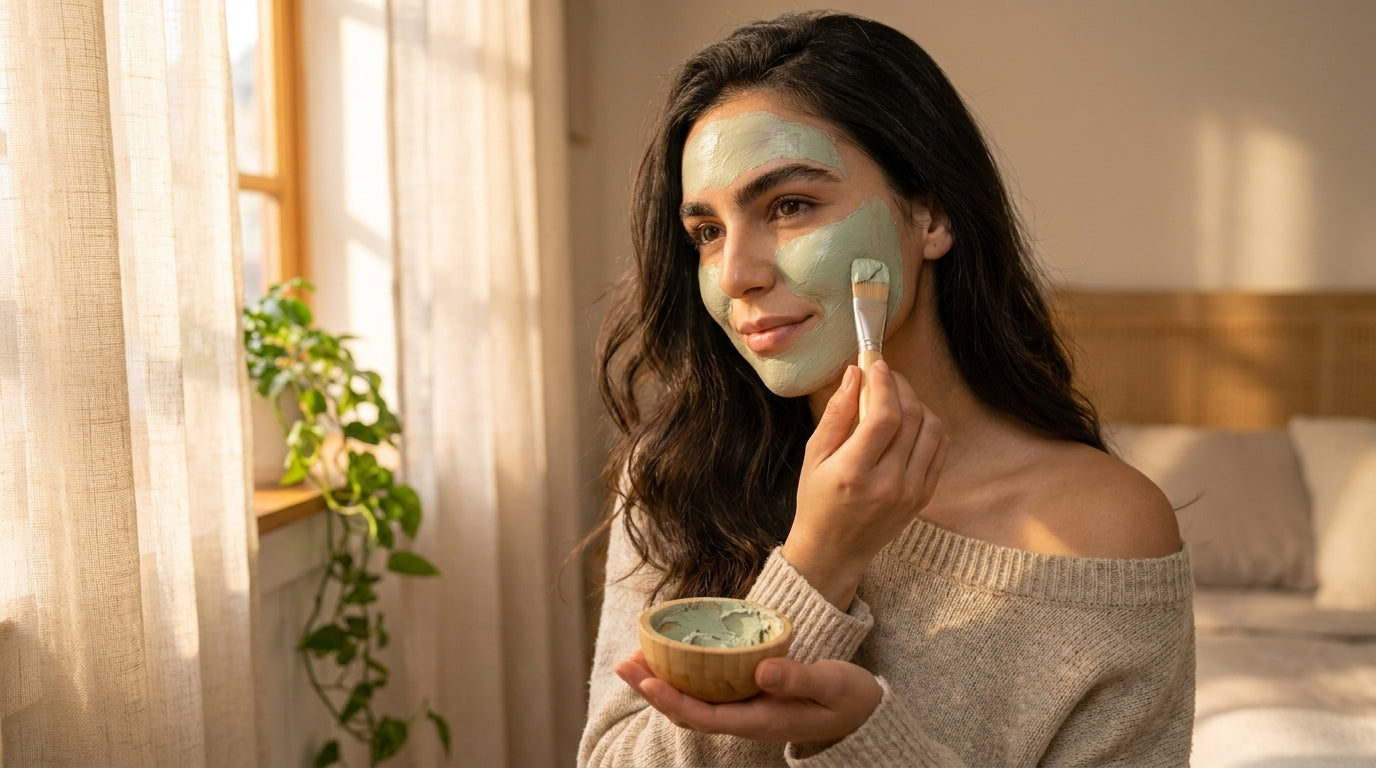
The second option is why dry powders and anhydrous oils are the sensible base for home skincare. A jar of clay or a bottle of jojoba oil is stable on the shelf because there is no water in it. You add the water at the moment you use it. That is the whole logic behind how we make our kits, and it is not a marketing position, it is just the safe way to do this at home.
Rule two: never make your own sunscreen
Homemade sunscreen recipes have spread widely on social media, usually zinc oxide stirred into a carrier oil or shea butter. Do not make them. Do not use them. In Australia this is the DIY trend most likely to cause real harm.
The reason is not that zinc oxide fails to block UV. It is that the SPF of a sunscreen depends almost entirely on how evenly the filter is dispersed and how uniformly the film sits on skin, and neither can be judged by eye. SPF is a measured value, established in a laboratory on human volunteers under a standardised protocol. It cannot be estimated from a recipe.
How hard is it to get right? In June 2025, CHOICE tested 20 sunscreens sold in Australia and found only four met their SPF 50 or 50+ claim. One product returned an SPF of 4 against a claimed 50+. These were commercially manufactured, TGA-listed products made by companies with formulation chemists and access to accredited testing, and 16 of 20 still missed. The TGA investigated, and recalls of multiple sunscreens for lower-than-claimed SPF followed.
If professional formulators with laboratory testing miss the mark that often, a kitchen blend has no realistic chance. And the consequence of getting it wrong is not a breakout. Australia has among the highest rates of skin cancer in the world. Buy sunscreen, check that it is listed on the ARTG, and reapply it properly.
We do not sell sunscreen and have no intention of starting. We are saying this because it is the one place where the DIY instinct genuinely puts people at risk.
Ingredients worth using
Clay
A dry, shelf-stable base you hydrate at the moment of use, which sidesteps the water problem entirely. Kaolin suits most skin including dry and sensitive; bentonite is far stronger and better kept for occasional use on oily skin. The two are not interchangeable, and our kaolin vs bentonite comparison sets out the pH and absorbency differences with the numbers sourced.
Jojoba oil
Technically a liquid wax ester rather than an oil, and close in structure to the sebum skin produces itself, which is why it absorbs without a greasy film. It is also unusually slow to oxidise, so it keeps well without a preservative. Good as a moisturiser on its own and good as an addition to a clay mask.
Niacinamide
Vitamin B3. Supports the skin barrier, helps with redness and evens out tone over time. It is water-soluble and stable across a wide pH range, which makes it one of the more forgiving actives to work with at home. Buy it as a cosmetic-grade powder with a stated purity rather than opening a supplement capsule.
Hyaluronic acid
A humectant that holds a great deal of water, which makes it useful for hydration. Two practical cautions. It needs to be applied to damp skin and sealed with an oil or moisturiser, or in dry air it can pull moisture out of the skin rather than into it. And because it is used in water, anything you premix needs a preservative or needs using immediately.
Botanical powders
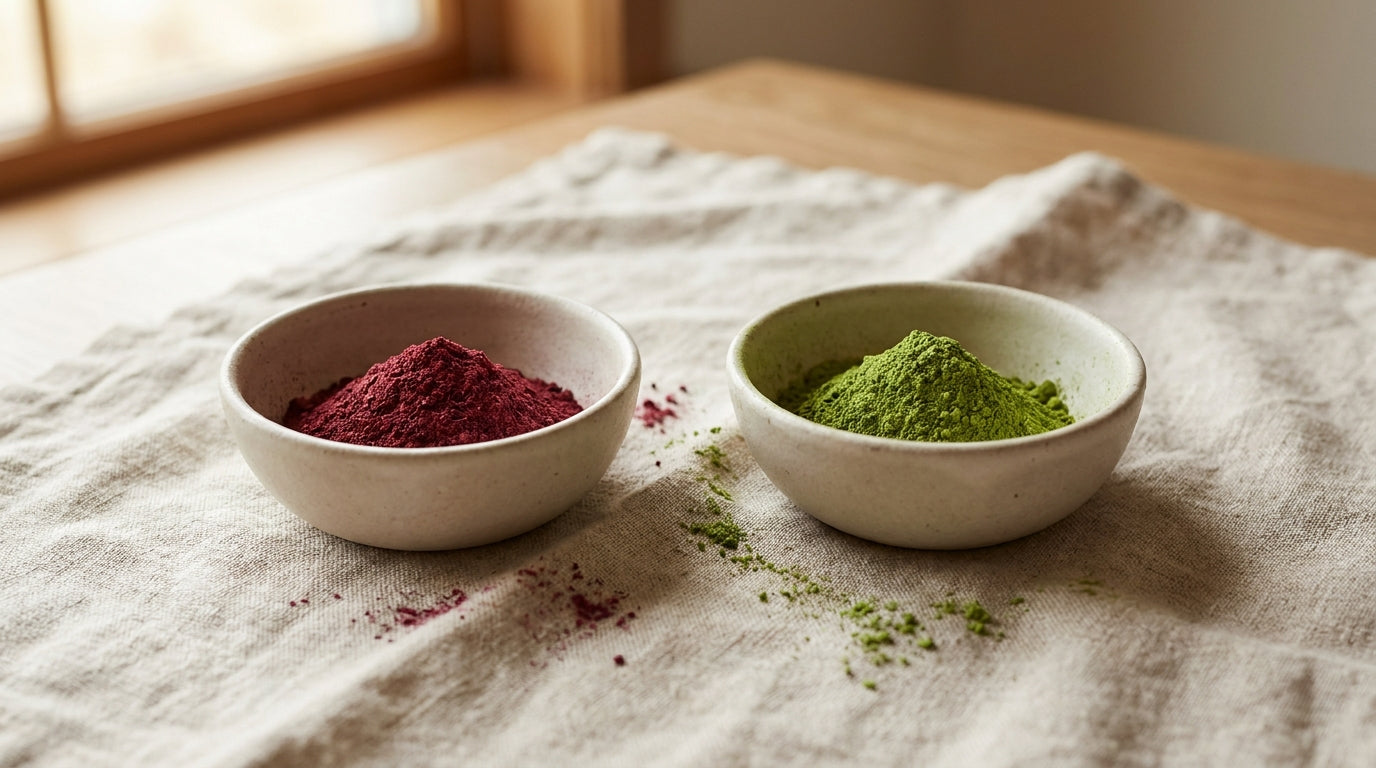
Hibiscus brings natural fruit acids for gentle exfoliation, matcha brings antioxidants. Both are dry, both keep, and both are straightforward to blend into a clay base. Add them at mixing time, not in advance.
Ingredients to leave out
Lemon juice
Strongly acidic, far below the skin's own pH, and a common cause of irritation. Citrus juice on skin is also phototoxic, which in the Australian sun is a poor combination. There is no version of this that is a good idea.
Baking soda
Strongly alkaline, at the opposite end of the scale from where skin sits. It strips the barrier and leaves skin tight and reactive. Use a fine clay or oat flour if you want gentle exfoliation.
Apple cider vinegar
Popular as a toner, and harsh on skin at the concentrations people typically use. If you want to use it at all, dilute it heavily and infrequently, and stop at the first sign of stinging. Stinging is not the product working.
Undiluted essential oils
Essential oils are not gentle just because they are botanical. They are concentrated, they are a leading cause of contact allergy in cosmetics, and citrus and peppermint oils in particular are phototoxic. Keep them well diluted, patch test, and be aware that sensitisation builds over repeated exposure. Skin that tolerated an oil for months can turn on it.
Anything you saw in a fast video
The format rewards drama, not skin. If a recipe promises a dramatic overnight result, the mechanism is usually irritation, and the visible change is inflammation rather than improvement.
The short version
- Keep water out of anything you store, or preserve it properly.
- Mix fresh and use once. It is safer and it works better.
- Buy your sunscreen.
- Patch test anything new, on a small area, before it goes near your face.
- Gentle and consistent beats strong and occasional.
Start with a stable base
Everything in our kits is dry or anhydrous, so it keeps on the shelf and you blend it fresh each time with no preservatives involved. Start with Australian Kaolin Clay, or the Deluxe Bundle if you want the full set to experiment with. Free shipping on orders over $80.
Last updated 10 August 2026.